 By
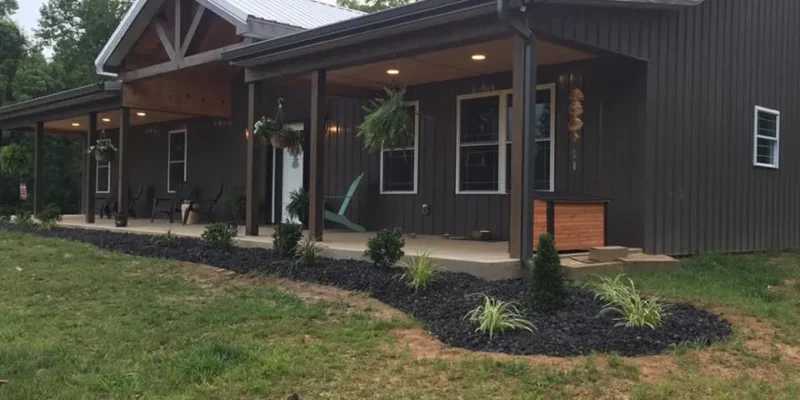
By The relationship between architecture and land economics is undergoing a profound transformation. As land-use regulations evolve to accommodate new forms of rural and suburban living, hybrid structures such as the barndominium have emerged as both architectural innovations and economic instruments. Companies like Lancaster Barndominium are redefining how zoning, development, and adaptive design intersect. Their steel-based residential systems represent a pragmatic response to the tension between regulatory constraints, environmental demands, and the rising cost of land ownership in America’s fast-changing real estate landscape.
The Evolution of Zoning and Its Impact on Hybrid Housing
Zoning was historically designed to separate industrial, agricultural, and residential spaces. However, as urban peripheries expanded and remote work reshaped how Americans inhabit land, zoning codes have started to evolve. The Lancaster Barndominium concept fits precisely within this shift. It bridges agricultural zoning flexibility and residential functionality, allowing property owners to use their land for both living and light economic activity without requiring extensive rezoning.
Many counties across Pennsylvania and the broader Midwest have begun incorporating mixed-use agricultural-residential allowances. These updates enable structures like barndominiums to comply with existing codes while still accommodating modern lifestyle needs, such as workshops, studios, or small-scale agricultural operations. The adaptability of steel-based architecture becomes a zoning advantage rather than a constraint.
Architectural Adaptability as an Economic Strategy
From an economic standpoint, adaptive architecture directly influences land value. A structure that can evolve in function—residential, commercial, or agricultural—enhances long-term asset liquidity. Lancaster Barndominiums provide modular designs that can be reconfigured or expanded as zoning permissions shift.
For example, a barndominium built on agriculturally zoned land may initially serve as a residence with a workshop or machinery space. Over time, as local ordinances permit, owners can convert portions into rentable living units, craft production areas, or rural offices. This flexibility converts static property into an adaptive investment, maximizing return per acre of land.
Integrating Design with Local Zoning Frameworks
Compliance begins at the design stage. Lancaster Barndominiums use engineered drawings tailored to local jurisdictional codes, addressing setbacks, floor area ratios (FAR), and accessory use classifications. Their design methodology ensures that even as counties update ordinances, the structural footprint and use-case potential remain compliant.
This process also involves collaboration between engineers, surveyors, and local building departments. Pre-engineered building models streamline approvals because they already meet International Building Code (IBC) and American Iron and Steel Institute (AISI) standards. This alignment reduces time-to-permit, minimizes zoning variances, and enables faster project execution.
The Economics of Rural Density and Vertical Efficiency
Rural land development traditionally prioritised horizontal expansion. However, the rise of barndominiums has introduced a new paradigm of vertical efficiency within rural density planning. By integrating high-span steel framing and loft-based layouts, Lancaster’s designs allow for multi-use vertical zones—living quarters, storage, and work areas within the same structural footprint.
This vertical efficiency not only optimises space but also reduces environmental impact by minimizing land disturbance. Economically, it translates to higher functional density without infringing on zoning limitations that restrict subdividing or adding accessory dwellings.
Bridging Policy and Sustainability
Modern zoning increasingly includes sustainability metrics, such as stormwater management, green-space retention, and energy efficiency standards. Lancaster Barndominiums are engineered to align with these evolving sustainability clauses. Their smaller ground disturbance areas, rainwater harvesting systems, and energy-efficient envelopes contribute to compliance with environmental performance guidelines.
Moreover, adaptive reuse of rural parcels into barndominium developments often revitalizes underutilised land without requiring infrastructure expansion. Counties benefit from increased tax revenue and revitalised community participation while maintaining ecological balance.
The Financial Dimension of Land Flexibility
From a financial perspective, zoning compatibility significantly influences both mortgage viability and resale potential. Traditional lenders often struggle to appraise hybrid properties due to limited comparable sales. Lancaster’s consistent engineering documentation and modularity make their projects easier to evaluate, increasing financing accessibility.
Furthermore, properties that can serve dual purposes—residential and commercial—demonstrate stronger equity retention during market fluctuations. The combination of compliant design and adaptive function positions Lancaster Barndominiums as low-volatility real estate investments within emerging rural economies.
County-Level Precedents and Model Ordinances
Several counties have already established pilot ordinances supporting mixed-use steel structures. These ordinances recognise the unique engineering safety of pre-fabricated steel systems, allowing them under residential classifications without industrial restrictions. Lancaster’s engineering documentation often serves as a template for local code compliance due to its conformity with ASTM standards and certified wind and snow load testing.
The result is a growing body of precedent where barndominiums are not seen as exceptions but as integrated components of rural land policy. Over time, such acceptance is expected to influence state-level updates to Uniform Construction Codes (UCCs) across multiple jurisdictions.
The Future of Decentralised Development
The macroeconomic implication of barndominiums extends beyond individual projects. They embody a model of decentralised development where residents can live, work, and produce on the same parcel of land. This distributed land-use model reduces dependency on urban zoning, supports rural economies, and mitigates urban sprawl.
Lancaster’s scalable frameworks make this model replicable across counties seeking to balance population growth with zoning integrity. It signals a gradual shift from centralized urbanization toward resilient micro-communities supported by flexible zoning adaptation.
The Regulatory Advantage of Data-Backed Engineering
Modern zoning boards rely heavily on empirical validation. Lancaster Barndominiums utilise engineering simulations, soil tests, and wind load analyses to generate precise data sets supporting permit submissions. This technical transparency provides local officials with quantifiable confidence, often expediting approval timelines.
In a policy environment that values compliance through documentation, having data-driven design models allows property owners to navigate evolving zoning codes without costly redesigns or appeals.
Conclusion: A Blueprint for the Future of Rural Real Estate
Lancaster Barndominiums represent more than just architectural creativity. They are strategic instruments of land-use evolution. By aligning advanced steel engineering with adaptive zoning compliance, they demonstrate that the future of rural and semi-urban housing lies in flexibility, precision, and integration with policy.
As counties and developers continue to reconcile ecological priorities with human settlement needs, the Lancaster model provides a scalable, code-friendly pathway toward sustainable, multi-use living spaces. In the long term, adaptive architecture will not merely comply with zoning—it will help shape it.
FAQs
Q: Can a Lancaster Barndominium qualify for residential zoning in agricultural districts?
A: Yes. Their hybrid classification and residential-grade engineering often meet requirements for agricultural-residential zoning, depending on county ordinances.
Q: How does adaptive design influence long-term land value?
A: Flexibility in function increases property liquidity. Structures that can be reconfigured for residential or commercial use retain value even as market and zoning conditions change.
Q: Are barndominiums considered sustainable under modern land-use policies?
A: Yes. The minimal footprint, energy efficiency, and low infrastructure demands align with emerging green zoning standards and rural sustainability initiatives.
Q: What challenges do local zoning boards face with barndominium applications?
A: The main challenges involve defining usage classification and assessing comparables for property appraisal. Comprehensive engineering documentation often resolves these issues.
Q: Can a Lancaster Barndominium be expanded if zoning changes in the future?
A: Absolutely. The modular steel framework allows vertical or lateral expansion with minimal structural disruption, enabling future compliance with revised land-use permissions.