 By
By The kitchen is more than a room—it is a living, breathing part of the home. It’s where mornings begin with fresh-brewed coffee, where families gather to share meals and memories, and where hosts weave culinary magic. In both form and function, the kitchen holds a unique position: it must be highly practical yet aesthetically inspiring. In recent years, kitchens have evolved from utilitarian cooking zones into stylish, multifunctional hubs that reflect personal taste and accommodate modern lifestyles. Designing a kitchen that is equal parts beautiful and functional requires thoughtful planning, intelligent design choices, and a clear sense of how you live. This article offers refined insights into building the perfect kitchen—one that complements your daily rhythm while exuding timeless charm.
Understanding the Kitchen’s Central Role
In traditional homes, the kitchen was often tucked away, hidden from guests and confined to function. Today, however, it has emerged as a central living space—open, accessible, and elegantly integrated with dining and entertaining areas. It is a room where utility and aesthetics must coexist seamlessly.
Why the Kitchen Matters More Than Ever:
-
It is the most used room in many households.
-
A well-designed kitchen increases property value.
-
It serves multiple purposes: cooking, dining, working, socializing.
-
It reflects personal lifestyle and culinary culture.
The kitchen must be intuitive, inviting, and inspiring—a space that supports daily tasks while also nourishing the soul.
Layout: The Foundation of Kitchen Design
Every great kitchen begins with an efficient layout. The famous “kitchen triangle”—comprising the sink, stove, and refrigerator—still holds true in principle, but modern layouts are often more flexible, accommodating diverse needs and open-plan living.
Common Kitchen Layouts:
-
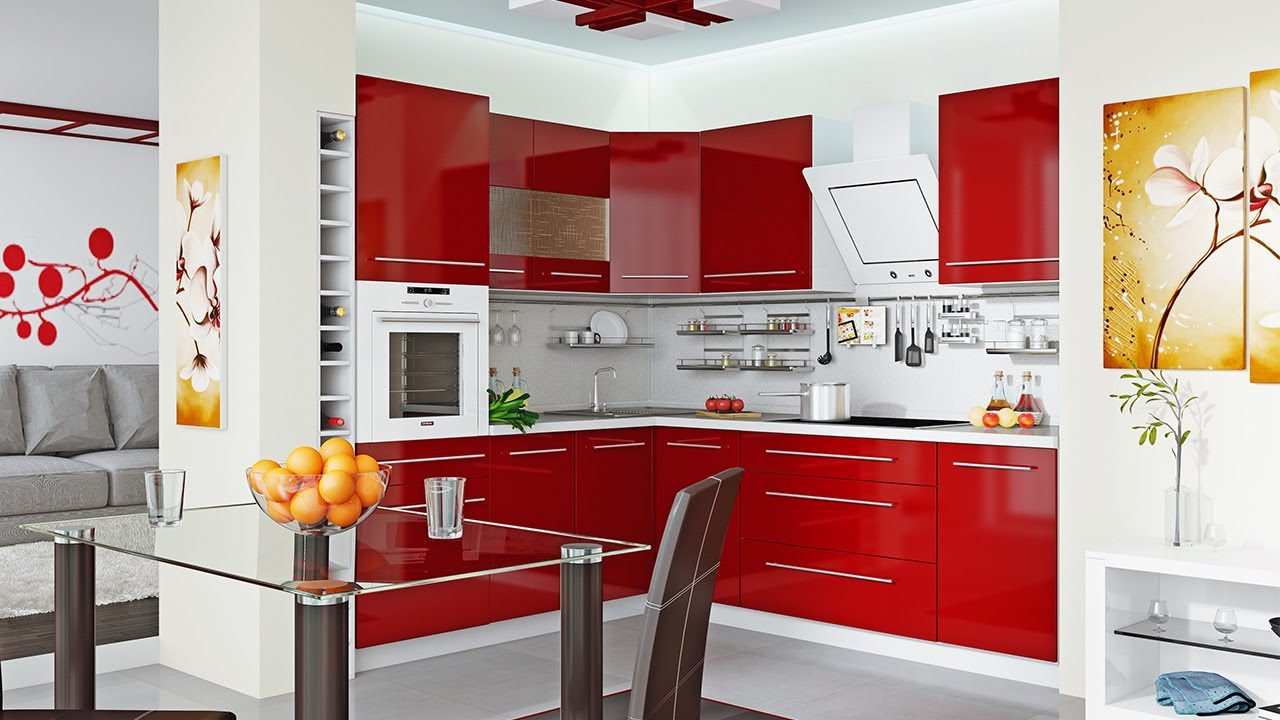
L-Shaped: Great for open spaces, offering flexibility and flow.
-
U-Shaped: Encloses the user for maximum efficiency and counter space.
-
Galley: Ideal for smaller spaces or one-cook kitchens.
-
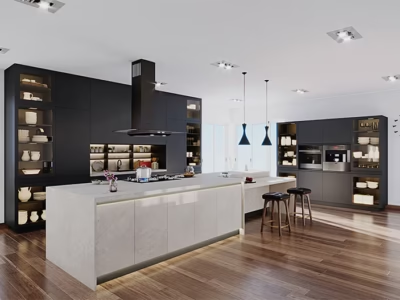
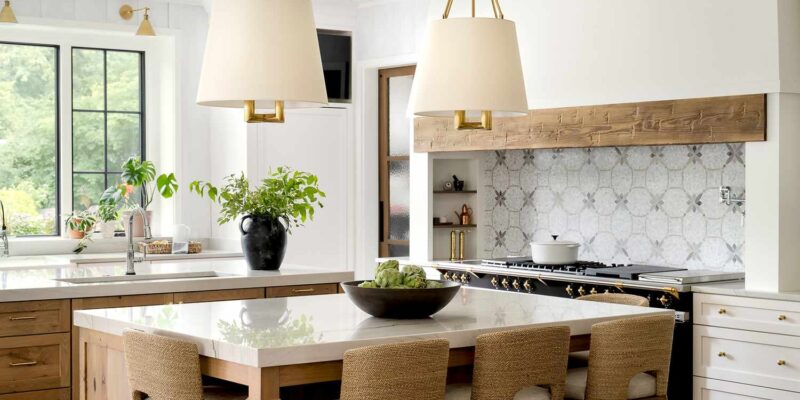
Island Layout: Adds workspace and sociability; ideal for entertaining.
-
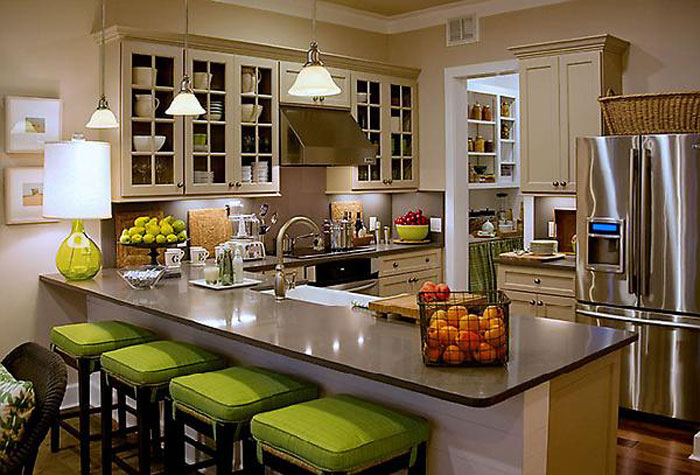
Peninsula: A hybrid of island and U-shape; works well in compact areas.
When designing the layout, consider the workflow, movement, and the number of people who will use the space simultaneously.
Materials Matter: Balancing Beauty and Durability
Kitchens face heavy wear and tear, making material selection crucial. Surfaces must withstand heat, moisture, stains, and daily use—all while retaining their elegance. Fortunately, today’s market offers a variety of materials that blend form and function effortlessly.
Key Material Choices:
-
Countertops: Quartz for durability and ease, granite for natural beauty, marble for luxury, butcher block for warmth.
-
Cabinetry: Solid wood for tradition, high-gloss lacquer for modern appeal, or laminate for budget-conscious durability.
-
Flooring: Porcelain tiles for resilience, hardwood for warmth, vinyl for easy maintenance.
-
Backsplashes: Ceramic tiles, glass, or textured stone can add character and protect walls from spills.
Selecting materials that complement one another in color and texture will elevate the space while ensuring longevity.
Storage Solutions: The Art of Subtle Organization
One of the defining features of an exceptional kitchen is clever, seamless storage. Clutter is the enemy of beauty and efficiency. Good design anticipates storage needs and integrates them in ways that keep the kitchen orderly and serene.
Smart Storage Ideas:
-
Pull-Out Drawers and Racks: Utilize deep cabinet space effectively.
-
Vertical Storage: Tall cabinets or hanging racks for cookware.
-
Built-in Organizers: Custom inserts for utensils, spices, and cutlery.
-
Pantry Walls or Closets: For bulk goods, small appliances, and dry storage.
-
Hidden Compartments: Toe-kick drawers or integrated bins for added utility.
A well-organized kitchen not only looks polished but makes every task more enjoyable and efficient.
Lighting: Illuminating Both Style and Function
Lighting in a kitchen must do double duty—practical enough for chopping vegetables, yet ambient enough for a cozy dinner. Layered lighting provides versatility and enhances the visual appeal of the space.
Types of Kitchen Lighting:
-
Ambient Lighting: General overhead fixtures such as recessed lights or pendant lamps.
-
Task Lighting: Focused light under cabinets or over work surfaces.
-
Accent Lighting: Used to highlight design features or create mood (e.g., inside glass cabinets or toe-kick LEDs).
-
Natural Light: Maximize windows and skylights to keep the space airy and inviting.
A well-lit kitchen feels open, clean, and energizing—perfect for both cooking and congregating.
Color and Style: Creating a Harmonious Palette
The color scheme of your kitchen plays a vital role in shaping its atmosphere. Whether you lean toward classic whites, bold hues, or rich natural tones, cohesion is key. Neutral palettes are timeless, while accent colors can add personality and interest.
Popular Kitchen Styles and Their Color Signatures:
-
Modern: Sleek lines, monochrome tones, integrated appliances.
-
Traditional: Raised-panel cabinetry, warm woods, muted earth tones.
-
Transitional: Blends modern and classic elements with a balanced palette.
-
Rustic or Farmhouse: Shiplap, apron sinks, distressed finishes, and soft whites or sage greens.
-
Industrial: Exposed brick, matte black fixtures, reclaimed wood and metal.
Choose a style that reflects your aesthetic while keeping longevity and trend-resistance in mind.
Appliances and Technology: Marrying Innovation with Elegance
Modern kitchens are increasingly smart, integrating technology that simplifies life while maintaining a refined appearance. From touchless faucets to Wi-Fi-enabled ovens, today’s appliances combine efficiency with elegance.
Appliance Trends to Consider:
-
Built-in or Panel-Ready Units: Blend seamlessly with cabinetry.
-
Induction Cooktops: Fast, efficient, and safer for families.
-
Convection or Steam Ovens: Enhance cooking versatility.
-
Smart Refrigerators: Offer interior cameras, shopping lists, and climate control.
While features are important, appliances should be chosen to support your cooking habits and energy goals without overpowering the design.
Personal Touches: Making the Kitchen Yours
Ultimately, the most beautiful kitchens are those that reflect the people who use them. Incorporating personal elements makes the space feel warm, welcoming, and lived-in.
Ways to Add Personality:
-
Display treasured ceramics, cookbooks, or vintage finds.
-
Use open shelving to showcase curated items.
-
Add artwork, plants, or a statement light fixture.
-
Choose hardware and finishes that express your style—brass, matte black, antique bronze.
These subtle touches transform a practical space into a personal haven.
Conclusion: Crafting the Soul of the Home
Designing a kitchen is a journey of balance—between art and utility, luxury and necessity, tradition and innovation. A truly great kitchen isn’t just about the fixtures or finishes; it’s about how it feels to live in. Does it inspire creativity? Does it bring people together? Does it reflect who you are? When you approach kitchen design with clarity, elegance, and intentionality, you create more than a room—you craft a legacy of warmth, connection, and refined living. In the heart of every memorable home, there’s a kitchen that nourishes not just the body, but the spirit.